A Region Photographers Have Always Chased
Distance from Les Cordeliers: 14.6 km (a convenient 15-minute journey eastward via Route D704).
The clearest evidence that this light has always been worth chasing predates photography retreats by close to a century. Robert Doisneau first came to the region on a family holiday in 1937, part of the first wave of French paid vacations, and returned in August 1939 on assignment for the newly founded Rapho agency, his very first professional job, a photo report on canoeing trips through the Dordogne and Lot. The declaration of war cut that assignment short, but the photographs from both visits survived, and today they fill La Gare Robert Doisneau, a former railway station in Carlux converted into the only permanent gallery space in France dedicated to his work.
The gallery holds two permanent exhibitions. One retraces those 1937 and 1939 visits directly: unchanged landscapes, family snapshots, canoe trips down a river that, in Doisneau’s images, looks remarkably like it does now. The other, built around the “slices of life” theme he returned to throughout his career, turns to the region’s own people: portraits of local characters, including workers from the now permanently closed Rougié foie gras house nearby.
An interactive lab lets visitors try their hand at the darkroom techniques Doisneau himself used, a small café occupies the old station house, and a rotating program of temporary exhibitions brings other photographers’ work through on top of the permanent collection. A generation or so earlier, the Impressionist painter Gaston Anglade built his reputation on mist-layered Dordogne pastoral scenes, part of a loose, informal tradition of artists who found here what Barbizon’s painters found in the forest of Fontainebleau: a light worth returning for.
The Photographer’s Field Note
The Composition: Document the structural interplay between the vintage train depot architecture and the rich tonal shifts of the historic silver-gelatin prints hanging inside.
Technical Spec: 50mm, f/2.8, ISO 400, spot-metering directly on high-contrast print midtones.
What to Pack for the Light
The Périgord rewards a fairly simple kit over an elaborate one. A wide-to-normal lens (roughly 24–50mm equivalent) covers most of the valley viewpoints and Sarlat’s tight medieval streets alike, while a short telephoto earns its weight for compressing the layered hills behind Castelnaud or Domme into something closer to what the eye actually perceives. A sturdy tripod matters more here than in most places, since the blue-hour and golden-hour light this region is known for comes with correspondingly long shutter speeds. A polarizing filter cuts glare off the Dordogne’s surface and deepens the sky on the clear days that follow rain, useful more often than not, since this is exactly the weather pattern that also brings out the region’s famous mushroom season. Comfortable shoes matter as much as any lens: several of the best viewpoints on this page are a walk from the nearest parking.
The Light, Season by Season
Spring
Spring brings the clearest air of the year, washed by frequent rain, and the freshest green on the valley’s famous walnut and oak canopy, excellent for the wide river panoramas at Domme and Trémolat, less reliable for anyone chasing a dry sunset.
Summer
Summer offers the longest light and the most crowded viewpoints; early mornings and the blue hour after the day-trippers leave become correspondingly more valuable.
Autumn
Autumn is, by most accounts, the photographer’s season proper: the light turns warmer and lower even at midday, mist regularly fills the valley at dawn along the river bends near Trémolat and Limeuil, and the turning walnut and oak canopy adds a color the summer months simply do not have.
Winter
Winter strips the crowds away almost entirely and can deliver startlingly clear, low-angle light for most of the short day, though a handful of the smaller sites reduce their hours in the off-season, worth checking before building a shot list around them.
Sarlat at Blue Hour: The Old Town After Dark
Distance from Les Cordeliers: 0.0 km (located directly on your doorstep in the heart of Sarlat’s historical center).
Golden hour gets the reputation, but blue hour, the twenty or so minutes just after sunset, when the sky still holds color but the streetlights have come on, is arguably better suited to Sarlat’s medieval lanes than full daylight ever is. The honey-colored stone that makes the old town so photogenic by day takes on a completely different character once the lamps are lit and the crowds have thinned, which is exactly why a blue-hour shoot through the arcaded streets belongs on any serious visit with a camera.
The Photographer’s Field Note
The Composition: Position your camera at the corner of Rue des Consuls. Frame the deep cobalt-blue sky over the glowing, gas-lamp-illuminated stone archways.
Technical Spec: 24mm, f/11, 3.2-second long exposure, ISO 100, manually lock focus on the primary stone columns.
Marqueyssac at Opening: Before the First Tour Bus
Distance from Les Cordeliers: 10.9 km (an effortless 12-minute drive southwest through the valley via D57).
The Hanging Gardens of Marqueyssac, with over 150,000 hand-trimmed boxwoods rolling across a clifftop above the Dordogne, are dramatic at any hour, but arrive right at opening, before the first motor coaches of the day pull in, and the same gardens feel closer to a private landscape painting than a garden.
Beyond the photography, the gardens themselves reward a slower visit; see our guide to the gardens of the Dordogne for more.
The Photographer’s Field Note
The Composition: Stand at the western panoramic lookout point facing the Dordogne river before the morning fog burns off.
Technical Spec: 35mm, f/5.6, 1/160s, ISO 200, use a circular polarizer to balance reflective morning dew on the leaves.
The River’s Golden Hour: La Roque-Gageac & Château de Beynac
Distance from Les Cordeliers: 12.1 km to La Roque-Gageac / 11.8 km to Château de Beynac (both reached in under 15 minutes).
Some views simply ask to be photographed at the end of the day. La Roque-Gageac‘s troglodyte houses, built directly into a cliff face above the Dordogne, catch the low sun in a way that flattens nothing and hides nothing, every ochre stone and carved window picked out. A few kilometers on, Château de Beynac‘s medieval silhouette above the river has drawn photographers and filmmakers alike for the same reason; golden hour from the cliffs beneath it turns a fortress into a study in shadow and warm stone.
The Photographer’s Field Note
The Composition: Shoot from the boat as you drift along the Dordogne, framing the troglodyte houses of La Roque-Gageac rising straight out of the cliff face, with the river’s reflection anchoring the lower third of the frame.
Technical Spec: 70–200mm zoom for flexibility as the boat’s position shifts, f/8, 1/500s to counter boat movement, ISO 400, image stabilization on.
Practical Notes: Drones, Access, and Crowds
A few practicalities are worth knowing before arriving with a full kit. Drone photography around the region’s châteaux and historic sites is generally restricted, and rules can vary by site and change without much notice, so anyone planning to fly should confirm directly with each property rather than assume. Several of the best viewpoints, Marqueyssac and Domme especially, involve a walk from the nearest parking, longer at the more remote sites like the Cingle de Trémolat, so a bag built for walking beats one built purely for storage. Crowds follow a predictable pattern: the classic viewpoints fill fastest between mid-morning and late afternoon in summer, which is exactly why the hosts on this workshop build the schedule around early and late sessions rather than the hours everyone else has already claimed.
Domme: The Panoramic View at Dusk
Distance from Les Cordeliers: 13.2 km (a straightforward 15-minute journey south via Route D46).
Domme, a bastide town perched above the valley and classified among Les Plus Beaux Villages de France, offers one of the widest views in the entire Périgord: the Dordogne curling below, villages and châteaux scattered along its banks. At dusk, as the valley’s color shifts and the light flattens into something softer, it is less a single photograph than an entire panorama worth spending a full hour, if not more.
The Photographer’s Field Note
The Composition: Frame the wide, sprawling panoramic sweep from the high stone bastide ramparts right at deep twilight.
Technical Spec: 28mm, f/16, multi-shot panoramic grid stitch, 6-second exposure, ISO 100.
Château de Castelnaud: Two Castles, One Frame
Distance from Les Cordeliers: 14.1 km (reached easily in 16 minutes via the picturesque D57 route across the river).
Castelnaud faces its centuries-old rival Beynac directly across the valley, and that rivalry is exactly what makes the view worth the climb. From the castle’s upper terrace, 150 meters above the river, golden hour turns the scene into a study in two fortresses rather than one, Beynac’s silhouette clearly visible in the same frame. Morning light is generally considered the more flattering hour here, the reverse of Beynac across the water, which gives a photographer working both sites in a single day a natural order to follow: Castelnaud first, Beynac at day’s end.
The Photographer’s Field Note
The Composition: Shoot outward from the upper stone battlements of Castelnaud, using a telephoto frame to compress the distance across to Beynac’s high keep.
Technical Spec: 200mm telephoto, f/5.6, 1/250s, ISO 200, balance matrix metering to protect bright sky detail.
The Cingle de Trémolat: A Near-Perfect Meander
Distance from Les Cordeliers: 30.5 km (a scenic 35-minute drive west via Route D703 — the farthest stop on this page, and worth the extra time).
Trémolat’s belvédère looks out over one of the most complete river bends in the entire valley, the Dordogne curling almost 180 degrees below a scatter of fields and hills. It draws a fraction of the visitors that Domme does, and rewards the extra drive accordingly: summer foliage can crowd the main viewpoint, so the paths just to either side of it are worth trying if the classic angle feels blocked. Dawn mist over the river here is one of the more reliable atmospheric effects in the region, appearing often enough in autumn and spring to be worth an early alarm.
The Photographer’s Field Note
The Composition: From the belvédère, frame the full 180-degree meander with a strip of foreground field or tree line to anchor the bottom of the shot; arrive before sunrise to catch the mist still sitting on the river.
Technical Spec: 24mm, f/11, 0.6 graduated ND filter to balance the bright sky against the shadowed valley floor, 1/15s, ISO 100, tripod essential in the low pre-dawn light.
Limeuil: Where Two Rivers Become One
Distance from Les Cordeliers: 36 km (a 40-minute drive west via Route D703).
Most of this page’s viewpoints frame a single river’s curve. Limeuil, built on a promontory directly above the point where the Dordogne meets the Vézère, offers something structurally different: two rivers converging into one, seen from the panoramic gardens at the top of the old fortified village. The vantage point rewards a longer lens as much as a wide one: the confluence itself sits at a particular angle below the gardens, and a bit of compression helps draw the two waterways together into a single graphic line rather than two separate rivers competing for the frame.
The Photographer’s Field Note
The Composition: Shoot from the panoramic gardens above the village, using a longer lens to compress the confluence into a single graphic line where the two rivers meet.
Technical Spec: 135mm telephoto, f/8, 1/250s, ISO 200, circular polarizer to separate the distinct water tones of the Dordogne and the Vézère at the point they merge.
Frequently Asked Questions
When is the best time of year to photograph the Périgord?
Autumn is generally considered the strongest season for photography in the region. The light turns warmer and lower even at midday, dawn mist regularly fills the valley near Trémolat and Limeuil, and the turning walnut and oak canopy adds color that summer does not offer. Spring provides the clearest air of the year, summer provides the longest light but also the most crowded viewpoints, and winter offers dramatic low-angle light with almost no crowds, though a handful of smaller sites reduce their hours in the off-season.
What is the best time of day to photograph Sarlat’s old town?
Blue hour, the twenty minutes or so after sunset when the sky still holds color and the streetlights have come on, generally suits Sarlat’s medieval lanes better than full daylight. The honey-colored stone takes on a different character once the lamps are lit and the crowds have thinned.
Can drones be used at the region’s châteaux?
Drone photography around the region’s châteaux and historic sites is generally restricted, and rules can vary by site and change without much notice. Anyone planning to fly should confirm directly with each property rather than assume permission is granted.
How far are the main viewpoints from Sarlat?
Most of the region’s key locations sit within about a fifteen-minute drive of Sarlat’s town center. Marqueyssac is roughly 10.9 kilometers away, La Roque-Gageac and Château de Beynac are roughly 12 kilometers away, Domme is roughly 13.2 kilometers away, Château de Castelnaud is roughly 14.1 kilometers away, and La Gare Robert Doisneau is roughly 14.6 kilometers away. The Cingle de Trémolat and Limeuil sit farther out, at roughly 30.5 and 36 kilometers respectively, closer to a 35–40-minute drive, but both are considered well worth the extra distance.
What equipment should photographers bring?
A simple kit generally performs well. A wide-to-normal lens, roughly 24 to 50mm equivalent, covers most valley viewpoints and Sarlat’s medieval streets, a short telephoto helps compress the layered hills near Castelnaud and Domme, a sturdy tripod supports the long shutter speeds that blue hour and golden hour require, and a polarizing filter cuts glare and deepens the sky on clear days. Comfortable shoes matter as much as any lens, since several viewpoints require a walk from the nearest parking.
Base Your Photography Workshop at Les Cordeliers
To stay at Les Cordeliers is to be a short walk or drive from every location on this page, at exactly the hours that matter, with hosts who know, as well as anyone, which lane catches the light at six in the evening.
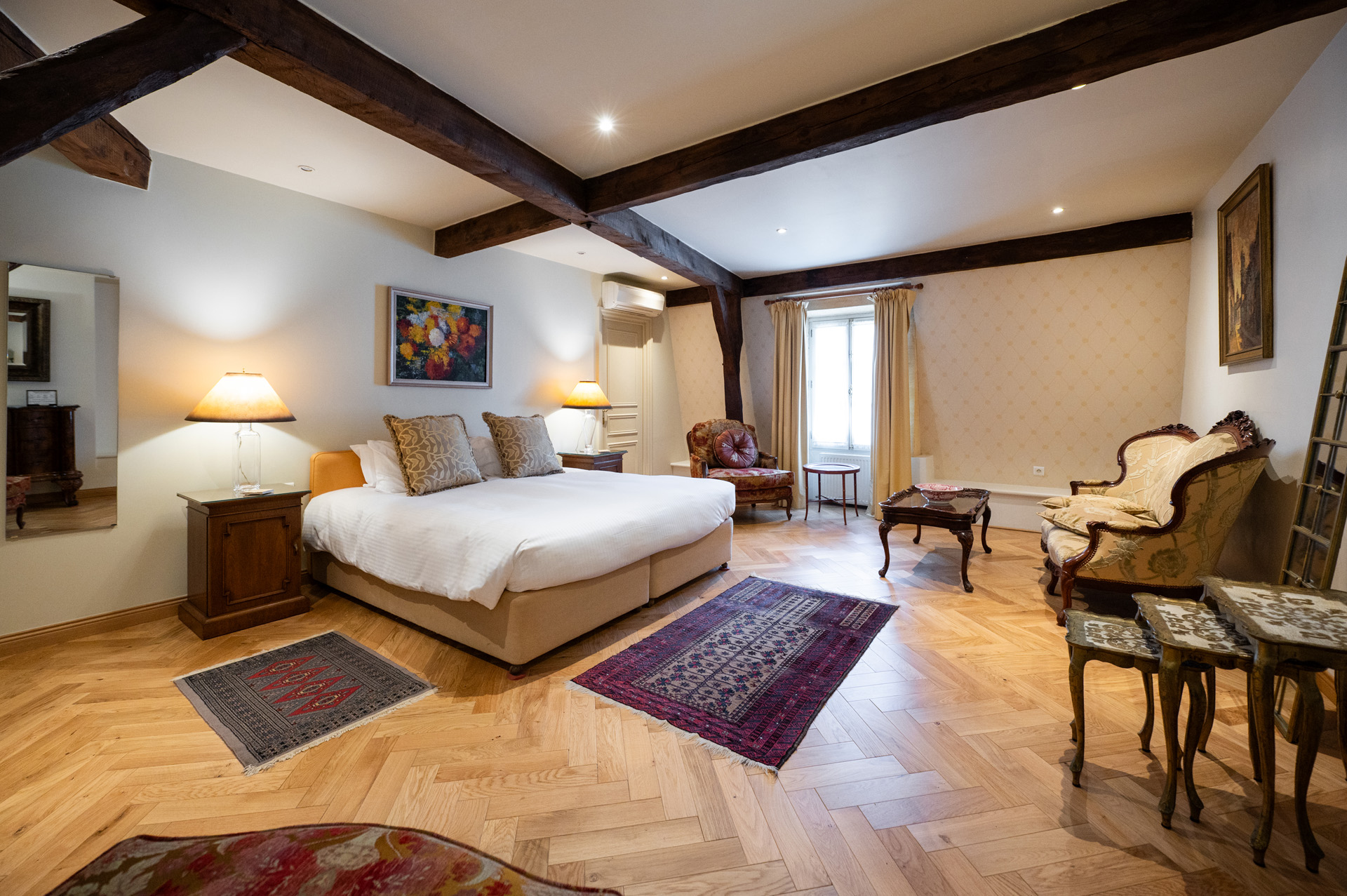
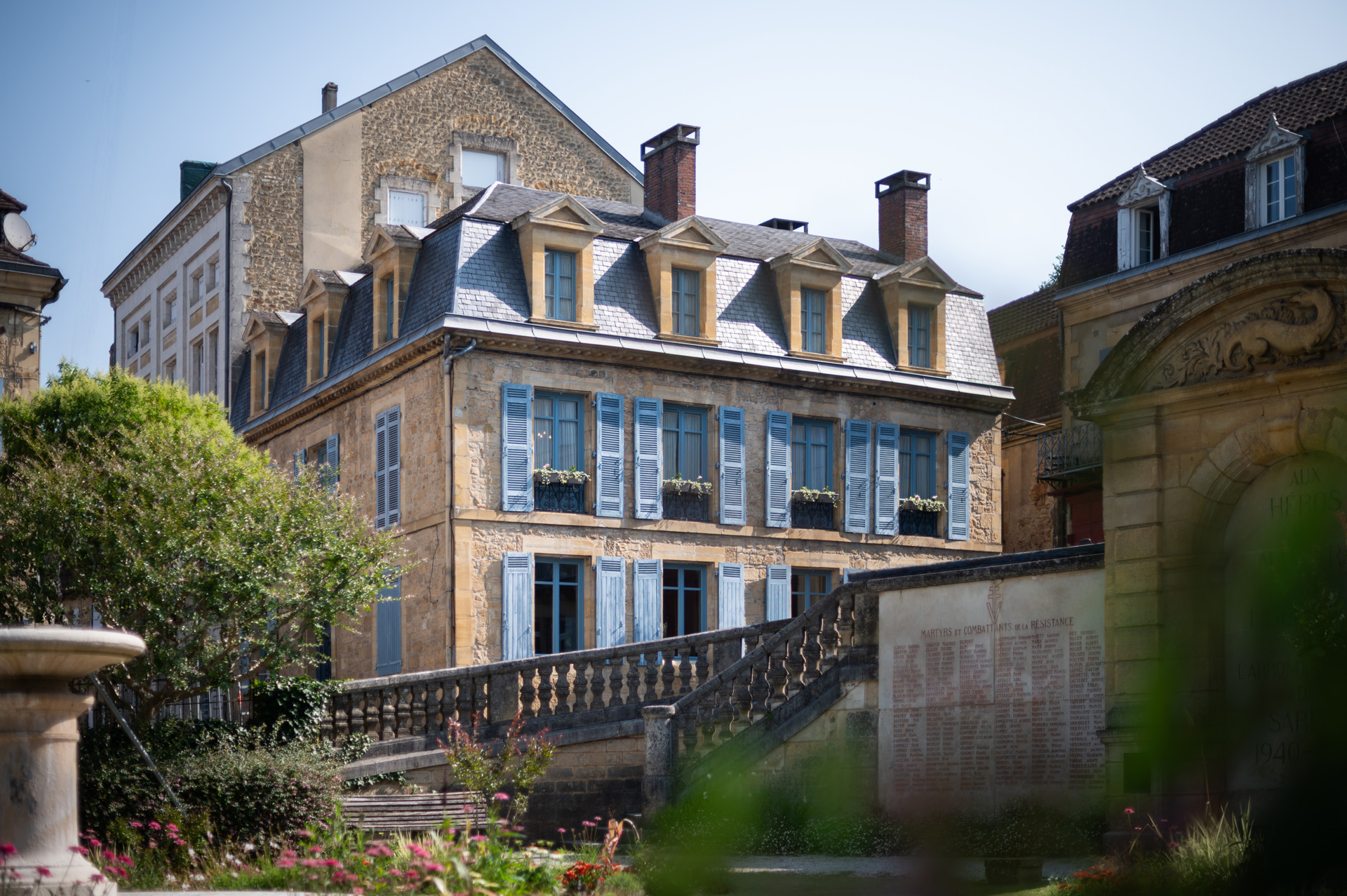
Chasing the legendary light of the Périgord calls for a base that understands a photographer’s schedule: the early dawn departures, the late blue-hour returns, and the need to keep gear close and dry between shoots. Located in the quiet historic center of Sarlat, Les Cordeliers blends medieval architectural heritage with refined modern comfort, so guests are never more than steps away from the town’s most photogenic lanes when the lamps come on.
Ready to chase it yourself, camera in hand? Join Chasing the Light in the Dordogne Valley this summer, or stay with us at Les Cordeliers in the heart of Sarlat. Book your suite or register for our next photography workshop today.