
Martin Walker: The Journalist Who Became a Novelist of the Périgord
Before Bruno, Martin Walker spent decades as a foreign correspondent and bureau chief for The Guardian, covering Moscow and Washington, and later worked in international policy circles as editor in chief emeritus of United Press International. He and his wife, food writer Julia Watson, settled in the Périgord in the late 1990s after visiting friends in the region, eventually buying a farmhouse near Le Bugue. Walker has described the appeal in plain terms: it was the history, the landscape, the food and the wine that made him want to write it all down, first as nonfiction and history, and then, in 2008, as a mystery.
Benoît Courrèges: A Police Chief Modeled on a Real Friend
Bruno, the series’ title character, was inspired by a real local policeman Walker met through the village tennis club, a small-town chief who disliked carrying his gun, coached children’s rugby, and knew everyone in his commune by name. That warmth carried straight into the books: Bruno solves crimes, but he is just as often found cooking a proper lunch, tending his garden, or standing up for the market vendors against an overzealous EU hygiene inspector. It is a gentler kind of detective fiction, closer in spirit to a long lunch than a car chase, and it is a large part of why the series has grown to nearly twenty novels and been translated into more than fifteen languages.
Is St. Denis a Real Village in France?
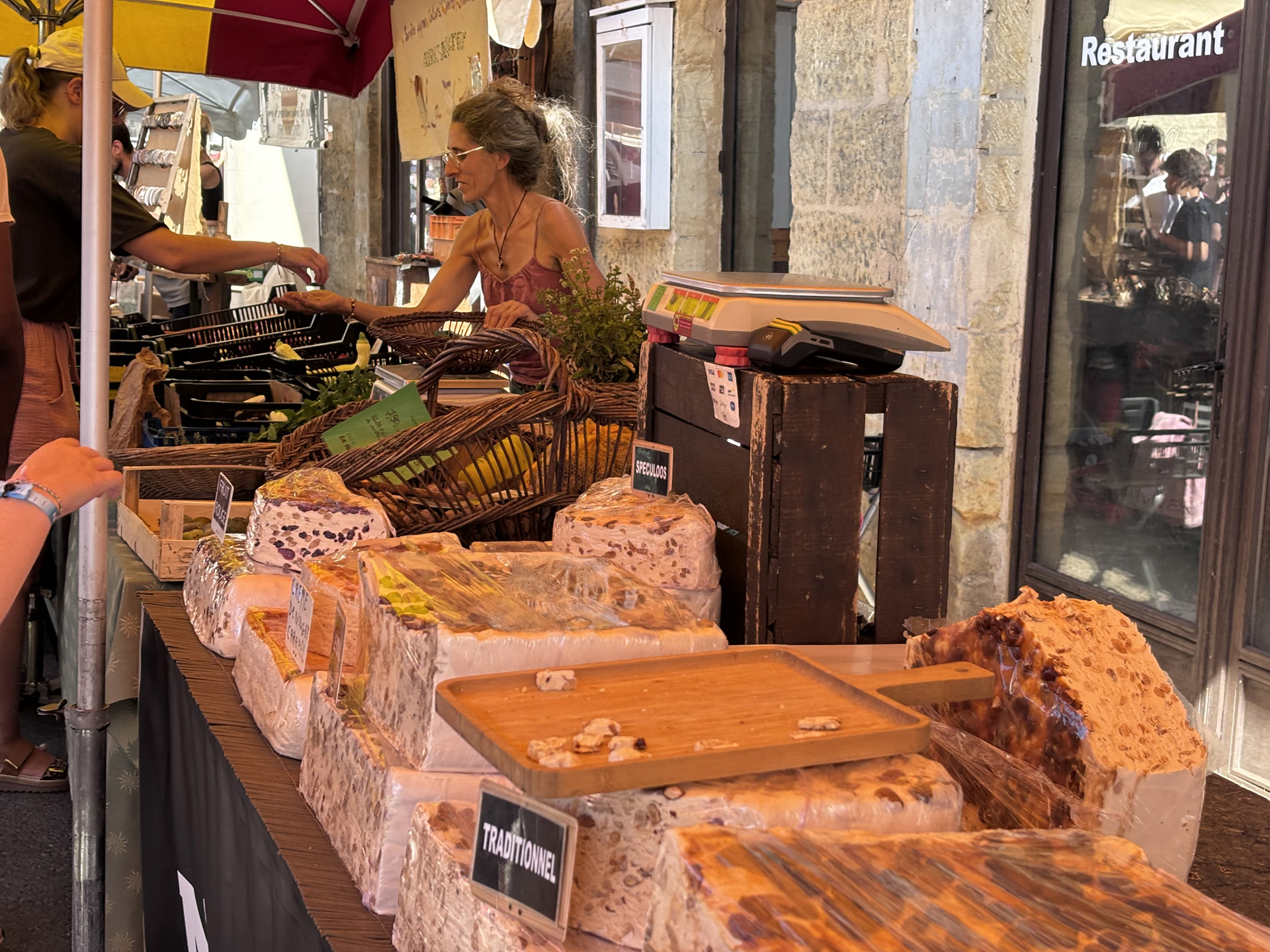
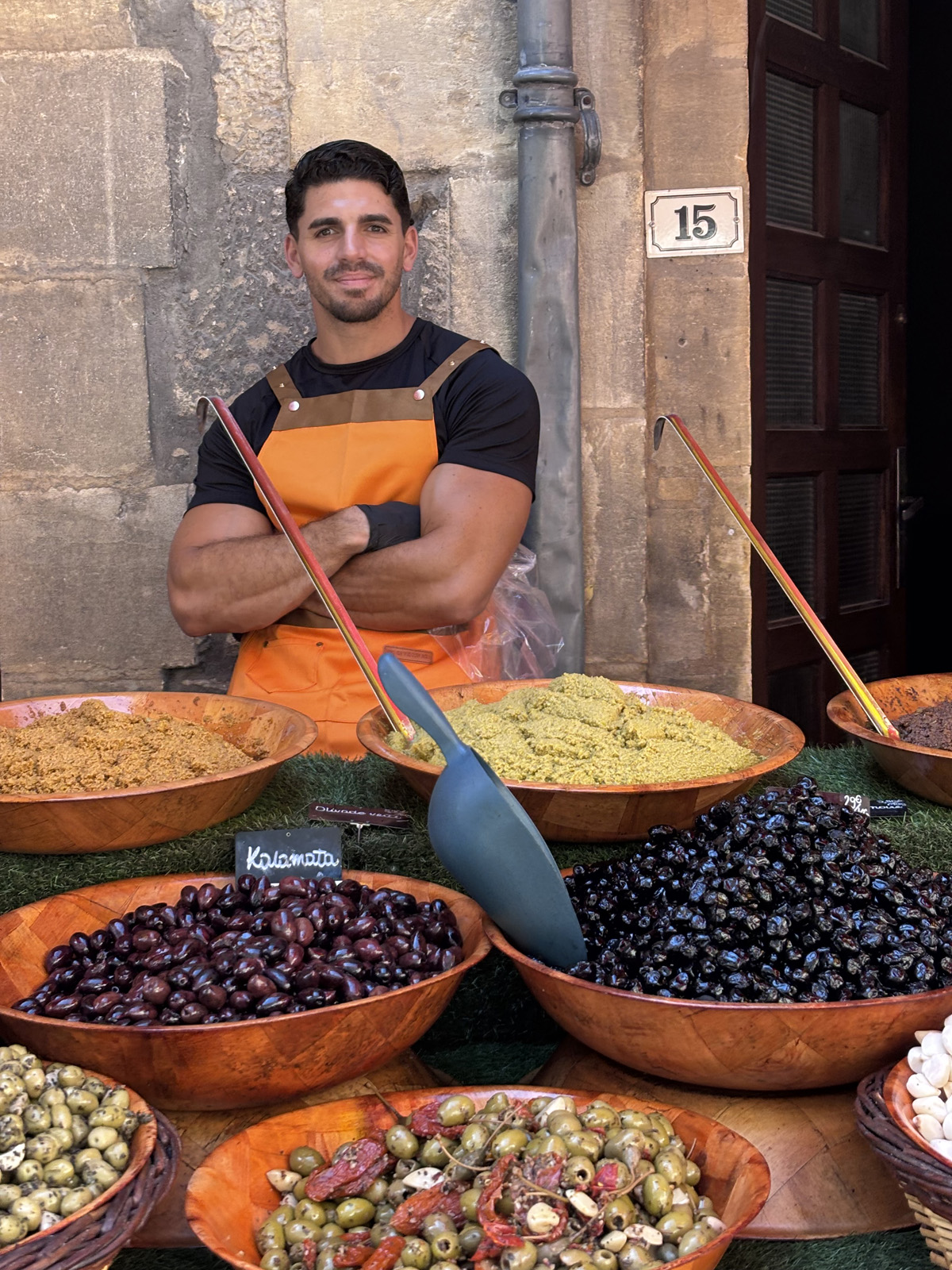
St. Denis does not appear on any map. The fictional village is closely modeled on Le Bugue, where Walker lives, but Walker has said he drew just as freely from Sarlat, Bergerac, and the villages of Les Eyzies, Saint-Cyprien, and Trémolat to build a town faithful to the department the French Revolution renamed the Dordogne, though locals, in the books and in life, still call it the Périgord. St. Denis’ weekly market, a fixture in nearly every novel, echoes a real one: Le Bugue’s own market has run on the same morning for roughly seven hundred years.
Where the Novels Are Really Set
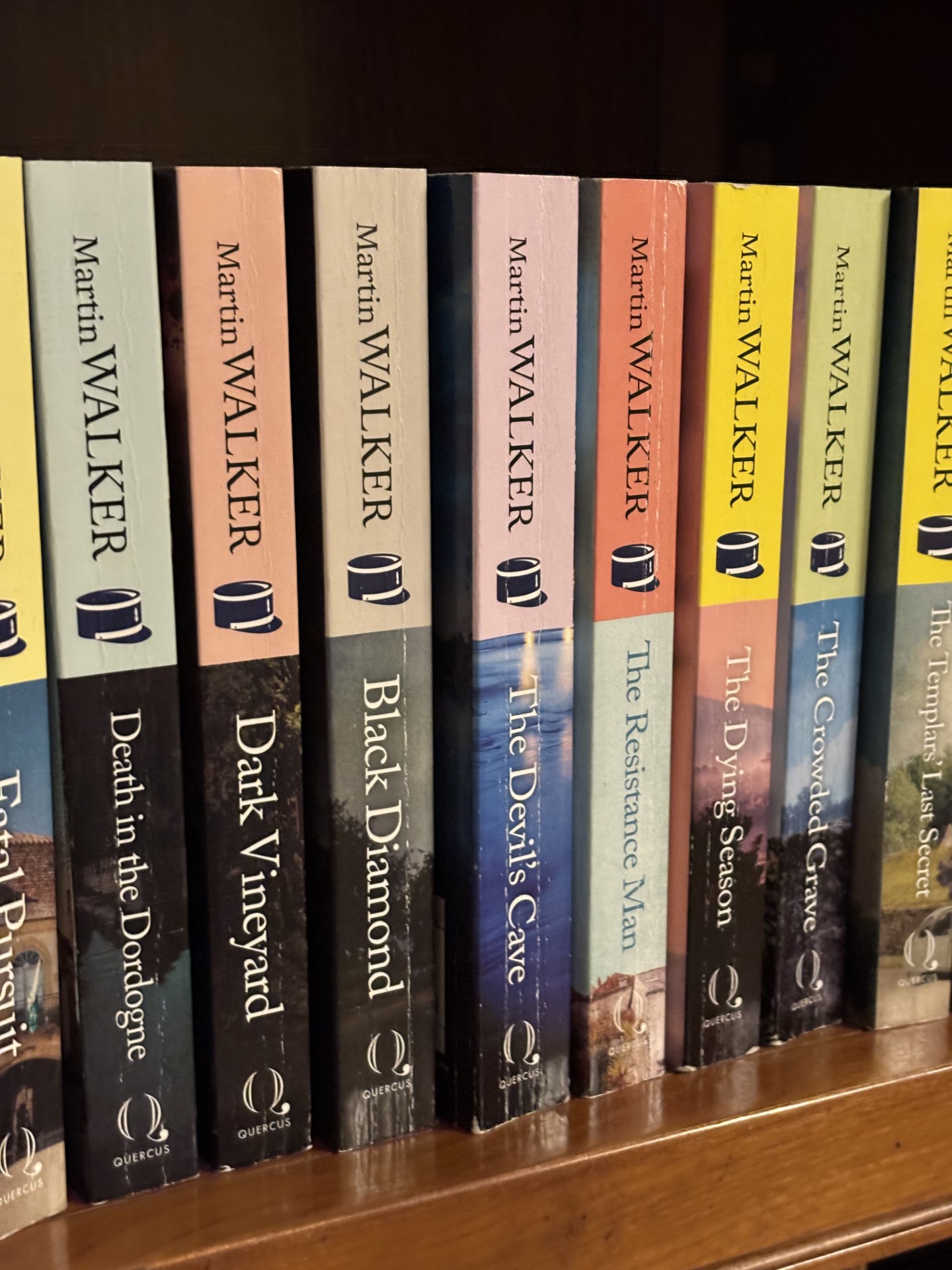
St. Denis draws most heavily on Le Bugue, but Walker has been open about borrowing pieces of a dozen real towns to build it: Saint-Cyprien and Belvès for their market squares, Les Eyzies for its prehistory, Siorac and Eymet for their river life, Sainte-Alvère for its truffle economy, and Trémolat for the bend in the Dordogne that turns up again and again in the books’ descriptions of the view from Bruno’s hillside. Each novel tends to pull one of these real places into sharper focus. The Crowded Grave grew out of a lecture Walker attended at the Museum of Prehistory in Les Eyzies on Neanderthal burial sites; Black Diamond follows the region’s truffle trade closely enough to double as a primer on how a brûlis actually works; The Devil’s Cave opens with a scene inspired by a jazz concert Walker attended inside the real Gouffre de Proumeyssac, just outside Le Bugue. Even Bruno’s own inspiration has a real address: Walker has said the character grew out of a local game warden he met through the village tennis club, a man who really did coach children’s rugby and really did dislike carrying a gun. Read enough of the novels and a rough map of the Périgord starts to assemble itself, built less from any single village than from the accumulated texture of a dozen real ones, several of them a short drive from Sarlat.
Where Can Visitors Taste the Wine From the Bruno Novels?
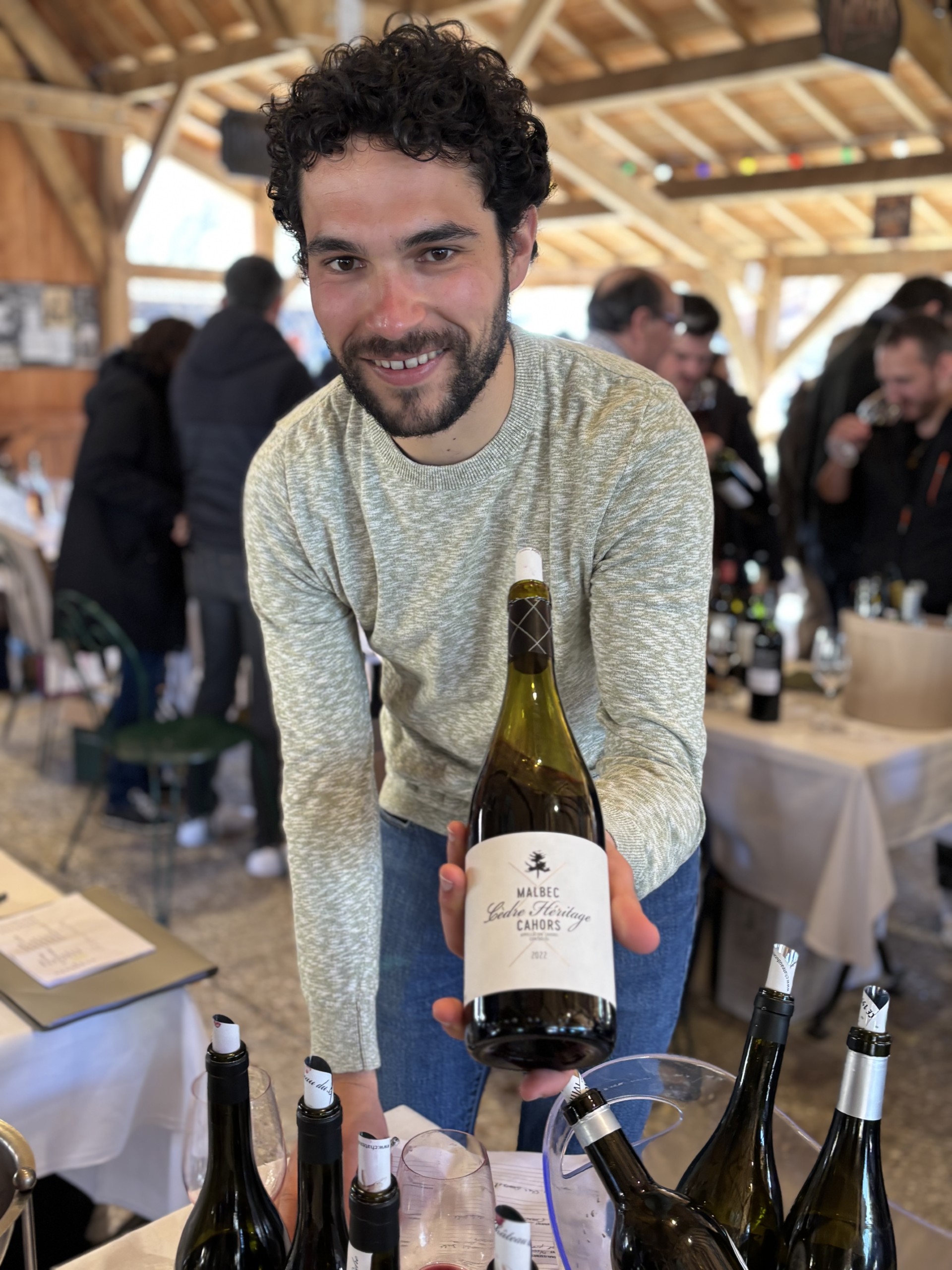
Few details tie the books to a single real address as directly as this one. Julien de Savignac, a family wine business since 1983, produces a Bergerac red dedicated to the series’ hero, the “cuvée Bruno,” and Walker himself has made appearances at the cellar over the years. It is the same Julien de Savignac where the Bruno Chief of Police Tour stops for a wine tasting on Martin Walker Day, with the author himself.
From Page to Table: Bruno’s Cookbook
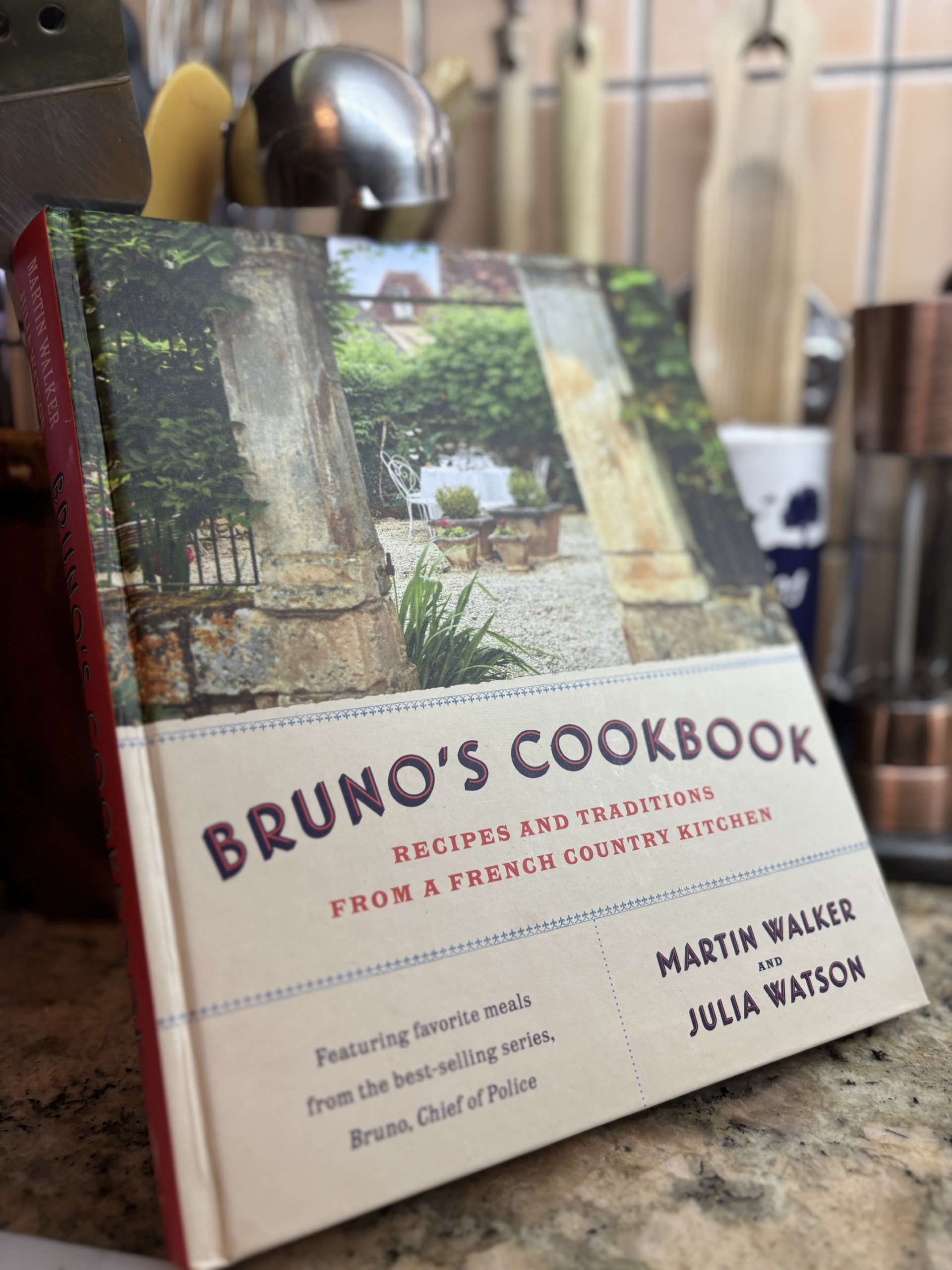
Food is never incidental in a Bruno novel: Bruno cooks in nearly every chapter, usually from whatever the market or his own garden produced that morning. In 2023, Walker and Julia Watson gathered the dishes that had accumulated across the series into Bruno’s Cookbook: Recipes and Traditions from a French Country Kitchen, part regional cookbook and part guide to the Périgord table the novels had been describing all along. Several delicious dishes straight from the book are already on the Tour’s menu.
For the full regional pantry behind those meals, from foie gras season to Bergerac’s wines, see our guide to the flavors of the Périgord.
Julia Watson: The Other Half of Bruno’s Kitchen
Behind every meal Bruno cooks is Walker’s wife, Julia Watson, a journalist with a career of her own that predates the novels by decades. She started in publishing in London before moving into journalism at The Sunday Times and later The Observer, then became one of the first women to serve as a Moscow correspondent for the Evening Standard, filing for the Daily Mail and broadcasting for outlets from the BBC World Service to Australian radio along the way. In Washington, she wrote a weekly lifestyle column for the UK’s Express Newspapers before joining United Press International as its food writer, covering the politics of food and nutrition trends in three columns a week, and contributing food and restaurant writing to The Washington Post and Gourmet magazine. That career is exactly why Bruno’s meals read as convincingly as they do: Watson co-authored The Bruno Cookbook with Walker in 2015, which won Gourmand International’s award for the World’s Best French Cookbook, and followed it with The Bruno Garden Cookbook in 2019, which won the same award again. She now writes Tabled, a weekly food blog of her own, and Walker has credited his wife with “all the good bits” of the cookbook, claiming only the mistakes as his own.

Which Bruno Novel Is the Best Place to Start?
Newcomers sometimes ask where to begin a series now approaching twenty books. The honest answer is that each novel stands on its own: Walker builds a complete mystery into every entry, and St. Denis’s cast of regulars gets enough re-introduction that a reader can start almost anywhere without feeling lost. That said, publication order rewards the patient: Bruno’s friendships, his romantic history, and his slowly shifting responsibilities in the valley all build gradually book to book, and starting from the beginning lets that unfold as intended. The first novel, Bruno, Chief of Police, published in 2008 and released in some editions as Death in the Dordogne, remains the obvious entry point, introducing the village, the market, and Bruno’s own restored shepherd’s cottage. Readers with a specific interest might do better jumping in elsewhere: Black Diamond, the third novel, follows a smuggling plot through the region’s truffle trade; The Crowded Grave, the fourth, pulls in the prehistoric caves around Les Eyzies; and The Devil’s Cave, the fifth, is set partly in and around Le Bugue itself. Whichever door a reader chooses, the same fictional St. Denis is waiting on the other side of it, and so, a short drive from Sarlat, is the real Périgord it was built from.
Beyond the novels, Walker has also written two collections of shorter Bruno stories, Bruno’s Challenge and a follow-up, built around smaller village disputes, minor mysteries, and even more food than the novels find room for. They read best after at least the first three novels, once St. Denis’s regulars are already familiar; readers who come to them cold tend to miss the running jokes and relationships the longer books have already set up. The series remains active, with a new entry most years since 2008: recent additions have followed Bruno into a Cro-Magnon-era mystery and a wartime cold case buried in the region’s forests, so newcomers who fall for the series now will have plenty of ground still to cover.
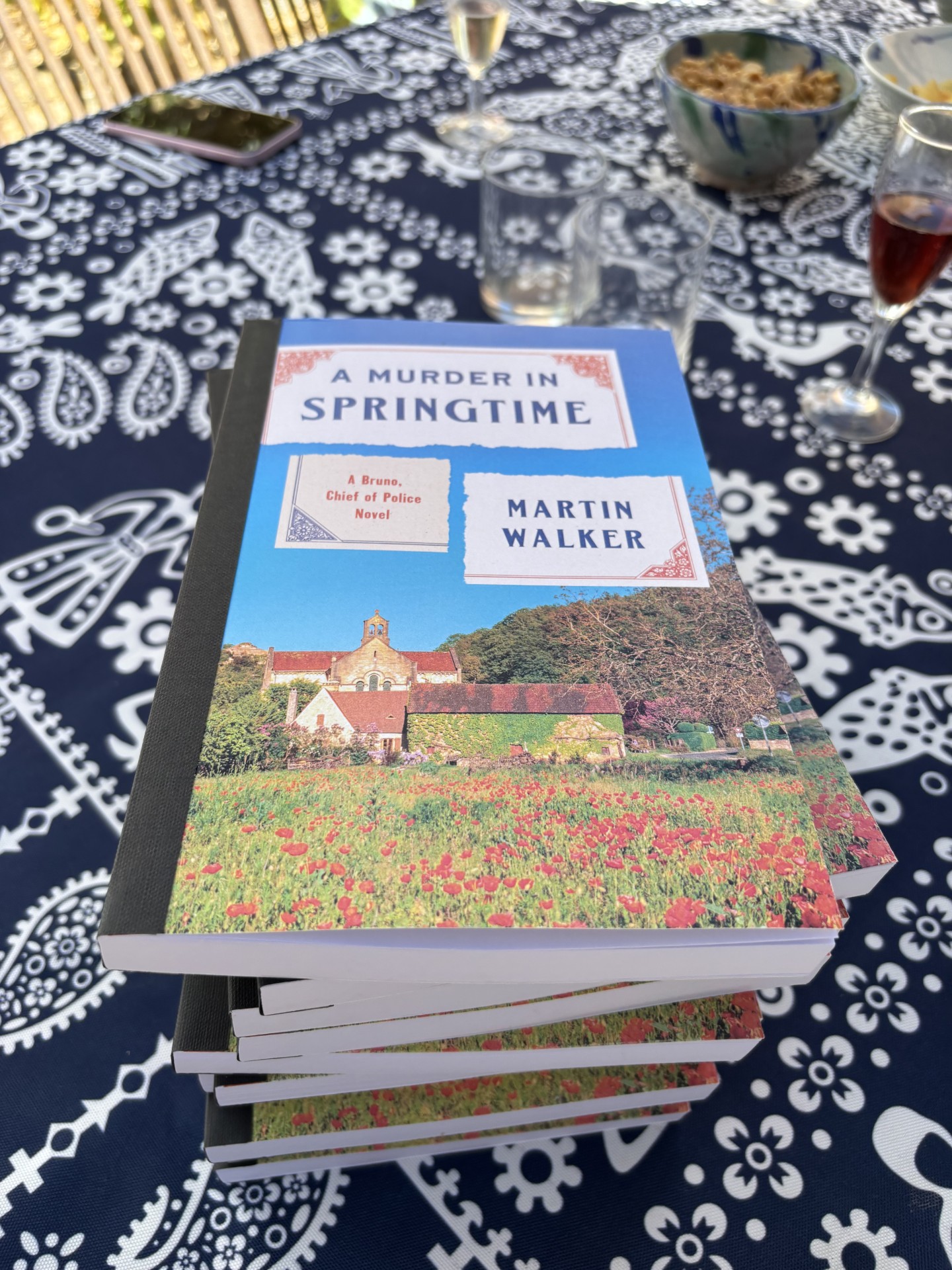
Reading (or Meeting) Bruno in the Périgord
To stay at Les Cordeliers is to be a short walk from the Sarlat market, and a short drive from Le Bugue, the real village behind St. Denis. Few fictional detectives have ever been so easy to visit in person.
Walker’s St. Denis joins a much older Périgord literary tradition, from Montaigne’s tower to the poets who once walked these same roads; see our guide to the region’s famous writers for more.
Ready to see it in person, with Martin Walker as host for a day? Join the Bruno, Chief of Police Tour this April, or stay at Les Cordeliers in the heart of Sarlat.